Short, simple posts are the best way to keep your visitors up to date. An attention-grabbing introductory paragraph and brief, informative content will ensure your readers keep coming back.
Rain streaked down the windows of the modest suburban house in Manchester, blurring the glow of streetlights into trembling halos. Inside, balloons sagged gently from the ceiling, and a chocolate cake sat untouched on the dining table.
It was Steve’s fortieth birthday, a milestone marked by close family and a few friends with homemade food, drinks and a private celebration. The smell of roasted food drifted through the rooms.
By noon, a few cars lined the street. Steve’s parents arrived first, followed by his brother and two sisters, arms full of gifts. Then other guests began to arrive. Steve moved through the day with practised composure. He smiled, accepted embraces, and thanked everyone with calm politeness. But inside him, the day felt heavy.
Forty marked more than age for Steve; it marked a reckoning. Ten years of marriage. A beautiful wife. Three children. A career that had once defined him, but had now been reduced to a fluorescent-lit warehouse on the edge of the city. As family members praised his resilience and joked about midlife milestones, Steve felt acutely aware of what he had lost, and what he feared he was still losing.
Monica watched her husband quietly. She had planned this day with care, stealing moments between deadlines and meetings at work to ensure everything was perfect.
The past year had been brutal for her. After two years away from work, following her last maternity leave, she had returned with force, landing a senior role at a multinational IT firm. The salary was extraordinary. It was four times what Steve now earned. But it came with relentless pressure.
Monica’s days stretched late into the night, her mind rarely resting. Work followed her home, blending into childcare, housework, and constant decision-making. Fatigue had become her constant companion, hardening her edges and dulling her patience.
Steve noticed the change, but he misread it.
To him, Monica’s exhaustion looked like detachment. Her clipped tone felt condescending. Her growing confidence at work felt like pride. He did not see the weight she carried; he saw only the imbalance: him struggling, and her thriving.
When the idea arose that he might leave the warehouse job to manage the home and children, Steve recoiled. The thought of depending financially on Monica felt unbearable. In his mind, it would confirm everything he feared: that he had become small in his own home.
As the afternoon settled into evening, the celebration reached its peak. Cake was brought out. Candles were lit. Applause rose as Steve leaned forward to blow them out, his children cheering with innocent excitement. Then Monica stepped away briefly, her heart racing. She had saved the most meaningful gift for last, one she believed might lift some of the invisible burden Steve carried.
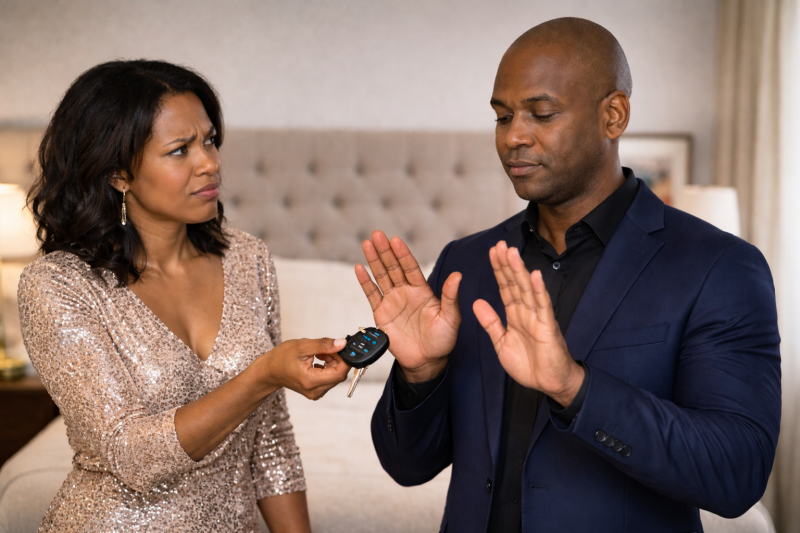
Parked quietly outside was a car; modest but new, purchased with careful planning and sacrifice. It was meant to represent partnership, reassurance, and love. When the moment came, Monica presented it with restrained hope, watching Steve closely, waiting for relief to soften his expression.
Instead, he declined it.
The refusal was not made in the presence of all the guests, but in private. Steve pulled Monica into a room in the house and returned the keys to her. He told her he was okay with the car he drove, and that he considered her buying the new car a sheer waste.
Monica’s face drained of colour as understanding dawned painfully. The gift was not rejected because it was unnecessary, but because of what it symbolised. Steve’s old car was already giving him issues, and a new car was a real need.
Steve’s family listened in disbelief as Monica told them what had just happened. His parents exchanged glances heavy with disappointment. His siblings looked away, embarrassed and confused. What should have been a moment of joy fractured into something sharp and exposed.
The celebration ended early.
In the days that followed, unease lingered. Steve’s parents, unsettled by what they had witnessed, invited the couple to their home in Stafford. There, in the quiet familiarity of the place where Steve had grown up, a long night unfolded. Without raised voices or accusations, truths surfaced.
The parents listened carefully, piecing together a story shaped not by malice, but by misunderstanding. They saw a man whose identity had been deeply wounded by job loss, clinging to work as proof of worth. They saw a woman crushed beneath the weight of responsibility, misinterpreted at every turn.
They recognised a pattern: assumptions replacing conversations, silence replacing curiosity. Steve and Monica had stopped asking each other questions. They acted on conclusions formed in isolation, reacting to imagined motives instead of real intentions.
The counsel they received was simple, but piercing. Marriage, they were reminded, does not erode because love disappears, but because communication does. Pride grows in silence. Resentment thrives on assumption.
The solution was not grand gestures or dramatic changes, but a return to humility. They must learn to ask questions before judging, to listen before reacting, to share fears before they hardened into ice.
By the time dawn crept through the windows, something had shifted.
Steve left his parents’ home carrying a quieter understanding of what his wife had been going through. Monica returned with a comprehension of her husband’s loss of self-esteem, which was the result of his plummeting fortune. Each of them realised just how much their partner really needed them.
There were no instant fixes, but there was a resolve; a shared agreement to do better; to rebuild not just finances or routines, but connection.
When they arrived home, the street was still. The new car remained parked where it had been left, catching the soft morning light. It waited, not as a symbol of pride or dependence, but of partnership: something their marriage still was, despite the fractures. Steve accepted his gift with gratitude.
Steve and Monica then stood at the threshold of their home, aware now that the real danger had never been money, success, or failure. It had been silence. And with that understanding, they stepped forward, not as a perfect couple, but as two people finally willing to speak up and to listen.
{}{}{}
Marriage doesn’t usually fall apart overnight, but it drifts when conversations stop being honest, intentional, and safe. Communication is the heartbeat of every healthy marriage, shaping how couples resolve conflict, express love, make decisions, and grow together through life’s changing seasons.
When communication is strong, misunderstandings are addressed before they become resentment, and emotional intimacy deepens. When it breaks down, sweet love can turn sour. Recognising the importance of communication in marriage will help couples connect better. They will learn to listen with empathy, speak with clarity, and build a partnership where both voices truly matter.
THE ACT OF ACTIVE LISTENING
Active listening is a vital skill that can significantly enhance communication between partners in a marriage. It involves not just hearing the words spoken but fully engaging with the speaker's message. This means paying attention to verbal and non-verbal cues, allowing your partner to feel valued and understood. In a world full of distractions, dedicating time to practice active listening can foster a deeper emotional connection and strengthen your relationship.
DEMONSTRATE EMPATHY
One of the key components of active listening is demonstrating empathy. When one partner expresses their feelings or concerns, the other should respond with understanding and validation. This approach not only helps in resolving conflicts but also encourages openness in sharing thoughts and feelings. Couples who practise empathy through active listening can navigate challenges more effectively and create a supportive environment for each other.
DIALOGUE OPENLY
As you learn to listen actively, it is essential to ask open-ended questions. This technique encourages your partner to elaborate on their thoughts and feelings, leading to more meaningful conversations. By showing genuine interest in what your spouse is sharing, you not only gain insights into their perspective but also reinforce the bond you share. Open dialogue can often lead to unexpected revelations that bring couples closer together.
PRACTISE PATIENCE
Moreover, active listening requires patience and practice. It is important to refrain from formulating responses while your partner is speaking. Instead, focus on absorbing their message completely before offering your thoughts. This practice can help in avoiding misunderstandings and resentment, which are common in couples who rush to respond. Over time, this will build a culture of trust and respect in your relationship.
Mastering the art of active listening is an ongoing journey that can bring profound benefits to your marriage. By embracing this skill, you can improve your communication, resolve conflicts more amicably, and nurture a deeper emotional connection. As you embark on the journey of marriage together, remember that the effort you invest in listening to each other will ultimately enrich your relationship, allowing both partners to thrive together.
EXPRESS YOUR NEEDS AND FEELINGS
In a healthy marriage, expressing your needs and feelings is vital for fostering understanding and connection. Don't assume that your partner understands what is going on with you; speak up. Couples often encounter challenges when they fail to communicate effectively, leading to misunderstandings and resentment. By learning to articulate your emotions and desires clearly, you create a safe space for dialogue that strengthens your bond. This process not only enhances intimacy but also encourages a culture of respect and empathy within the relationship.
USE THE "I" RATHER THAN "YOU" STATEMENTS
To express your needs effectively, it is essential to use "I" statements rather than "you" statements. For example, saying "I feel neglected when we don’t spend quality time together" is more constructive than saying, "You never pay attention to me." This method reduces defensiveness and promotes a more open exchange of feelings. Moreover, timing is critical; choosing the right moment to discuss sensitive topics can make all the difference in how your message is received.
RE-ECHO WHAT YOU HEAR
Active listening is another cornerstone of effective communication. When your partner shares their feelings, it is vital to give them your complete attention. You can also re-echo the things they have said. By re-echoing what you hear, you demonstrate that you value their perspective. This not only reassures your partner that their feelings are valid but also encourages further dialogue, making both parties feel heard and understood.
ADDRESS CONFLICTS PROMPTLY
When conflicts arise, it is crucial to address them promptly, using the skills of expressing needs and active listening. Don't allow misunderstandings to linger unattended, but address them as a team as soon as possible. Approaching disagreements as a team rather than as opponents can transform the conversation. This collaborative approach fosters a sense of partnership, allowing you to work together towards a resolution that satisfies both partners' needs.
CHECK WHAT'S UP WITH YOUR SPOUSE
Regularly setting aside time to check in with one another can help maintain open lines of communication. Whether it’s a weekly date night or a simple evening chat, establish occasions where you and your partner can express your thoughts and feelings freely. Over time, this practice will create a deeper emotional connection and a more resilient marriage, enabling both of you to thrive together.
USE NON-VERBAL COMMUNICATION EFFECTIVELY
As you seek to enrich your relationship with your partner, it is essential to refine your ability to interpret each other’s non-verbal cues. These include body language, facial expressions, and even the tone of voice, all of which can convey emotions and intentions without a single word being spoken.
When you embrace the nuances of non-verbal communication, you can enhance your understanding of one another, ultimately leading to improved conflict resolution and a more harmonious partnership. As you nurture this skill, you will discover that the silent language of love is just as important as the spoken word.